
Booking an accessible hotel room sounds straightforward, but accessible is not a universal guarantee. The term can mean very different things across hotels, countries, and booking platforms. A room described as accessible may still lack the features you actually need, and that mismatch can turn a manageable trip into a stressful one very quickly.
Asking the right hotel accessibility questions before you book helps protect your trip from the start. It gives you clearer expectations, stronger documentation, and a better chance of arriving at a property that truly works for you.
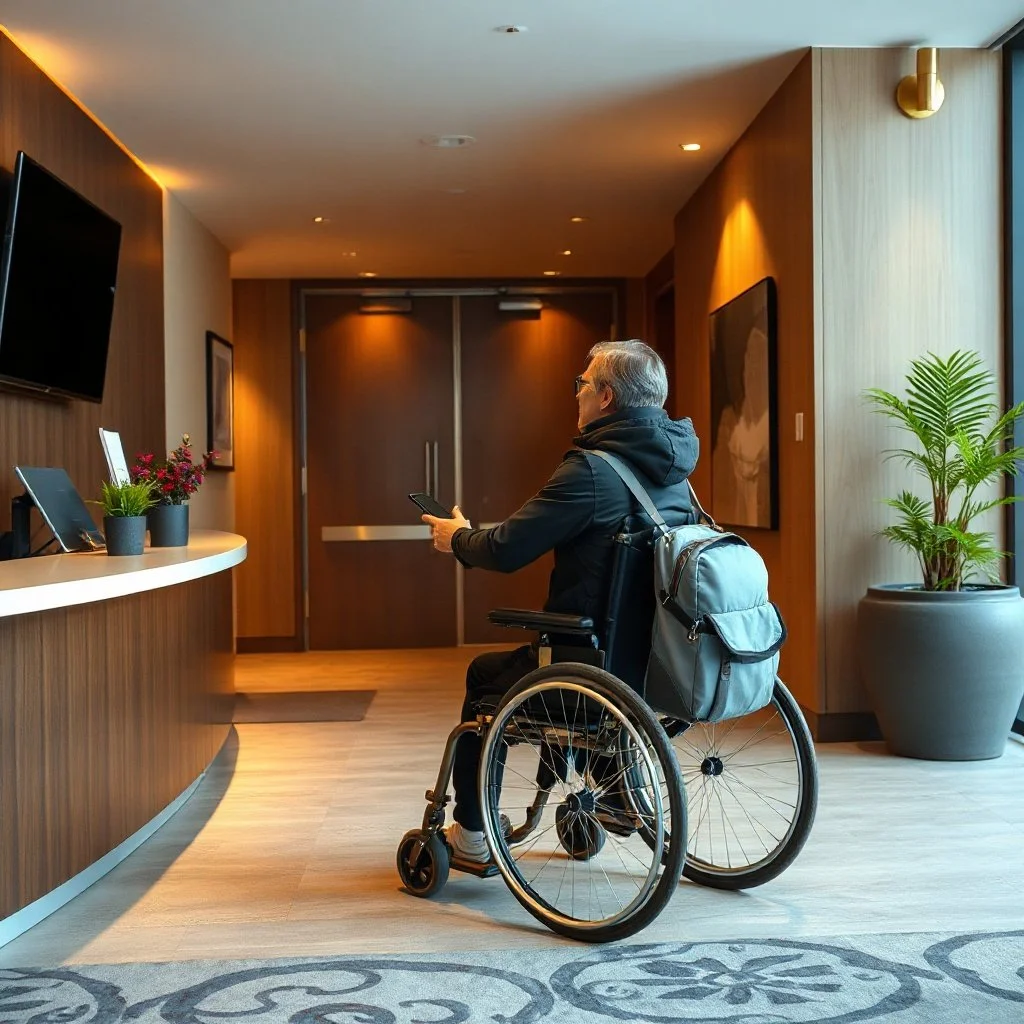
What Accessible Does Not Always Guarantee
One of the biggest mistakes travelers make is assuming the same accessibility protections exist everywhere. They do not.
In the United States, the Americans with Disabilities Act, or ADA, sets legally enforceable accessibility standards for hotels. Properties must provide accessible rooms, step-free routes, compliant bathrooms, and other required features. That gives travelers a stronger baseline and clearer language to use when confirming whether a property meets their needs.
In the UK, the Equality Act2010 offers similar protections, but older buildings are often more limited in what they can realistically provide. Across Europe, accessibility standards and enforcement vary significantly by country and by property. In many destinations outside the US and UK, legal protections may be inconsistent, limited, or absent altogether.
The less legal protection available, the more important it becomes to ask detailed questions before booking. In some places, direct communication and written confirmation may be your only real safeguard if a hotel misrepresents its accessibility.
Why Legal Context Matters
Knowing your legal context helps you ask smarter questions and set more realistic expectations.
At ADA-covered properties, you can ask whether the room meets specific compliance standards and request details by name. In other destinations, you may need to rely more heavily on room photos, written descriptions, and staff communication rather than assuming the word accessible means the same thing everywhere.
This does not mean international travel is off-limits. It means your verification process becomes even more important.
10 Hotel Accessibility Questions to Ask Before Booking
Before you confirm your reservation, ask the hotel these questions directly:
Is the accessible room near the elevator or lift?
What exactly does the bathroom include: a roll-in shower, grab rails, fold-down seat, handheld showerhead, and adequate turning radius?
Is the entire route from the entrance to the room step-free?
Are service animals welcome, and can that be confirmed in writing?
What is the bed height, and can adjustments be made if needed?
Is accessible parking available close to the entrance?
Can the room be further adapted with items such as visual fire alarms, portable ramps, or medication refrigeration?
What is the noise environment like for travelers with sensory sensitivities?
Is dining fully accessible in both physical layout and staff awareness?
Can all accessibility needs be noted on the reservation in writing?
These questions help move the conversation from a vague label to the actual details that determine whether the stay will work for you.
Questions to Ask if You Have an Invisible Disability
Hotel accessibility is not only about mobility. If you live with an invisible disability, chronic illness, autism, PTSD, ADHD, sensory sensitivities, or another non-visible condition, it helps to ask more specific questions about your environment.
You may want to ask:
Is there a quiet room available away from elevators, ice machines, or busy hallways?
Are blackout curtains available?
Is there a refrigerator in the room for medication?
Can fragrances be minimized or can a lower-scent room be requested?
How loud is the HVAC system?
Can staff note sensory or communication needs on the booking?
These details can make a major difference in how manageable your stay feels.
Booking Platform Gaps
Third-party booking platforms can be useful for research, but they are not always reliable for accessibility details.
Sites like Booking.com or Expedia often allow hotels to self-select accessibility filters without independent verification. That means a property may appear in an accessible search result even if the room setup does not truly meet your needs.
When possible, book directly with the hotel. Direct booking gives you more control, a clearer paper trail, and stronger accountability if the property is not as described.
Always Request Photos
Accessibility features are rarely shown clearly in standard hotel photography. Marketing images often focus on aesthetics, not function.
Ask the hotel to send real photos of the exact accessible room type and bathroom you are considering. Specifically request images of the shower, toilet area, grab bars, room entrance, bed clearance, and any step-free routes.
Actual photos are far more useful than a generic accessible room label.
Language and Communication Barriers
When booking internationally, accessibility terminology does not always translate cleanly. Words like accessible, adapted, or wheelchair-friendly may mean very different things across languages, cultures, and hotel categories.
To reduce confusion, ask for written descriptions in specific terms rather than broad labels. Photos help even more. The more concrete your questions are, the less room there is for miscommunication.
Arrival Timing and Staff Awareness
Even when a hotel has the right facilities, the staff on duty may not always know where accessibility equipment is stored or how your accommodations were noted.
Before arrival, contact the hotel directly and confirm that your needs are attached to the reservation. If you are arriving late, ask the hotel to note your accessibility requirements for the evening team as well.
This simple step can prevent avoidable problems at check-in.
Review Sources Matter
General review platforms are helpful, but they rarely filter by disability experience. A hotel with strong overall ratings may still be a poor fit from an accessibility standpoint.
Whenever possible, look for reviews written by disabled travelers or use dedicated accessibility resources such as Wheel the World or AccessAble. These sources often provide much more relevant information than general star ratings.
Autism and Sensory-Specific Resources
For travelers with autism or sensory processing needs, specialist resources can make hotel research easier.
IBCCES through AutismTravel.com highlights hotels and attractions that have completed autism-specific training. Autism Double-Checked offers similar certification for travel providers globally.
These tools can help identify properties where staff may better understand sensory needs, communication differences, and routine-related concerns.
Travel Insurance for Accessibility Needs
Standard travel insurance does not usually cover costs related to accessibility failures. If a hotel does not match its description, many basic policies will not reimburse you for the cost of moving to another property.
If this is a concern, look for specialist travel insurance that includes accommodation substitution or related disability-specific protections. It is worth checking before you travel rather than assuming you are covered.
Reconfirm Your Room Before Arrival
Hotels sometimes reassign rooms after booking, even when an accessible room was originally reserved.
Call24 to48 hours before arrival to reconfirm your specific room assignment and review every accessibility note attached to the reservation. This is especially important during busy travel periods or late arrivals.
One short call before travel day is much easier than trying to solve the problem at the front desk after a long journey.
You Deserve a Hotel That Actually Works for You
Asking hotel accessibility questions before you book is not asking for too much. It is practical, informed travel planning.
A single conversation before booking can save you from major stress later. The more clearly you confirm your needs in advance, the more likely you are to arrive at a hotel that supports your trip rather than complicates it.
If you want help finding and booking hotels that genuinely meet your accessibility needs, book a consultation with Clever Adventures Travel Agency for personalized support.
FAQ
What does accessible mean at a hotel?
It varies. Accessible is not a universal standard worldwide, so it is important to ask specific questions about room layout, bathroom features, and step-free access before booking.
Should I book accessible hotels through third-party sites?
You can use third-party sites for research, but booking direct is usually safer for accessibility needs because it creates a clearer paper trail and lets you verify details with the property directly.
What should I ask a hotel if I have an invisible disability?
Ask about quiet room options, blackout curtains, medication refrigeration, fragrance concerns, HVAC noise, and whether staff can note your needs on the booking.
How can I verify an accessible room before arrival?
Request actual photos, get accommodations confirmed in writing, and call again24 to48 hours before arrival to reconfirm the specific room assignment.
Are hotel accessibility laws the same everywhere?
No. Accessibility laws and enforcement vary widely by country, which is why detailed verification matters even more when traveling internationally.
